The VALUE of Subspecialization

The Value of Subspecialization

The value of subspecialization for nurse practitioners and physician assistants cannot be clearer than it is now. Since the global pandemic, we are seeing providers – including physicians – leave the work force in record numbers. We have also seen changes in patient visit patterns. In fact, emergency department volumes are down almost 30% nationwide … Read more

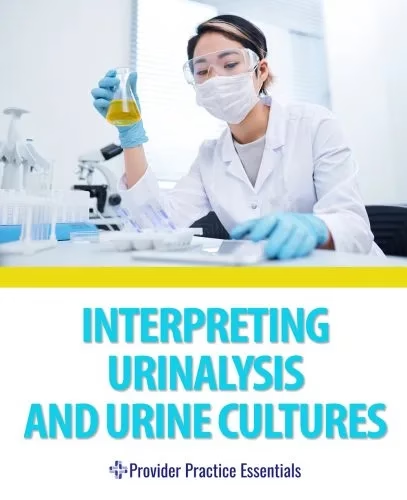
Interpreting Culture Results – Part 1: Urinalysis and Urine Cultures

Interpreting culture results and laboratory tests has long been the bread and butter of clinical practice. Basic Chemistries are relatively straight forward, and modern lab result sheets come with a handy reference that shows the upper and lower limits of ‘normal’ values. However, interpreting culture results is a bit more tricky. In this series, we … Read more

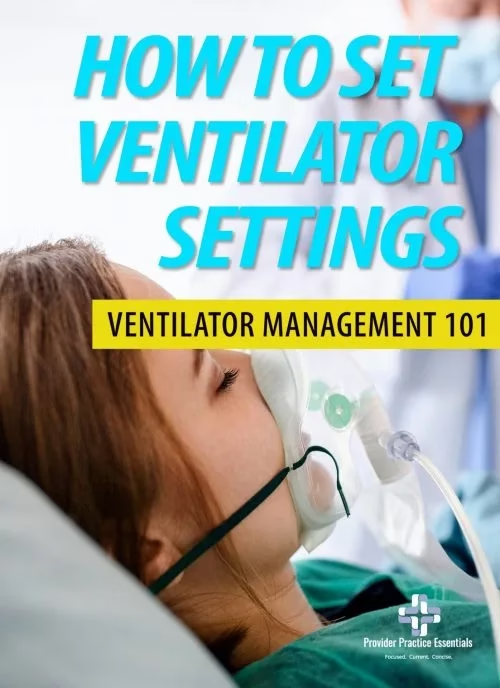
Ventilator Management Basics: How to Set Ventilators and More

It’s important for providers of all levels to know how to set ventilator settings and other ventilator management basics. Scenerio: You are covering a very busy ER and your patient in respiratory failure you was just intubated.  The Registered Respiratory Therapist (RRT) consults you on what ventilator settings you want the patient to be placed … Read more

Sensitivity, Specificity, Predictive Values, Pre/Post-test Probability, and Likelihood Ratios explained

The purpose of this post is to explain the concept of sensitivity, specificity, predictive values, and likelihood ratios.

Screening Tests

Screening tests (surveillance tests) are tools use to assess the likelihood that a patient may have a certain disease.  They are not definitive, but if positive, will heighten suspicion that would warrant use of a gold standard diagnostic test to rule in or rule out a certain diagnosis.  The goal of screening tests is to reduce the morbidity and mortality in a population group (Maxim, Niebo, & Utell, 2014). Examples of screening tests include routine EKGs, PSA, PAP smears, and mammograms.  For example, a male with an elevated PSA may have prostate cancer, BPH, or prostatitis. Positive results of screening tests need to be compared to the established gold standard test that is regarded as definitive.  In this case, a prostate biopsy is considered a definitive test, as it will reveal the etiology of the elevated PSA. Screening tests are less invasive and less costly, whereas the gold standard test may be more invasive, expensive, or too late (discovered during an autopsy).  Ideally, gold standard tests, such as coronary angiography, breast biopsy, or colposcopy should have 100% sensitivity and specificity. However, in reality, this may not be the case, as it may be the best test given the clinical picture at the time (Maxim, Niebo, & Utell, 2014).  
Read more

Toolkit Agreement

REGISTER FOR THE ONLINE SKILLS AND PROCEDURE WORKSHOP

* EKG Interpretation * Suture workshop * Hands-on procedures * and MORE! *

23 Category I CME credits with additional credits for Emergency Procedures and Pharmacology

Program also includes a tote bag, full sized textbook with reference normal images and room for notes.

Suture training board, instruments, and all supplies are mailed to you directly.

This is a must-take program for anyone in clinical practice!

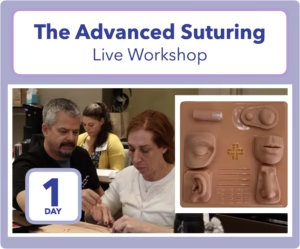
REGISTER FOR THE ONLINE ADVANCED SUTURING WORKSHOP

* Designed for All Skill Levels * Basic and Advanced Suture techniques * Wound and Laceration Management * Complex laceration repair and special body parts * Other Skin Procedures

12 Category I CME Credits with additional credits for Emergency Procedures and Pharmacology

Includes our special INTERACTIVE advanced suturing trainer with specialized body parts and other procedures!

Includes ear, eyelid, finger, mouth, philtrum, lip, tongue, and nose repair.

Also includes cyst removal, abscess drainage, subungual hematoma removal, nail removal, running subcuticular, irregular (v, y, and x) lacerations, dog ear lacerations, and more.

REGISTER FOR THE 1-DAY ADVANCED SUTURING WORKSHOP

* Designed for All Skill Levels * Basic and Advanced Suture techniques * Wound and Laceration Management * Complex laceration repair and special body parts * Other Skin Procedures

12 Category I CME Credits with additional credits for Emergency Procedures and Pharmacology

Includes our special advanced suturing trainer with specialized body parts and other procedures!

Program also includes coffee and beverage service throughout the day, and lunch.

Discounted hotel rooms are available at checkout for a limited time.

To enter the toolkit you must be a current subscriber!